Thoughtful placement of clear quartz throughout living spaces considers both practical material properties and spatial harmony. Its high light transmission capabilities interact uniquely with different room environments, while geometric forms and proportional sizing influence decorative balance. Regular repositioning helps maintain optimal energetic flow without overwhelming your space.

Well now, ever found yourself holding a piece of clear quartz wondering exactly where it belongs in your home? We've all been there—standing in the living room turning the crystal this way and that, second-guessing whether the bookshelf or coffee table feels right. Maybe you absentmindedly placed it near your computer last week and recently noticed how afternoon light hits it differently than morning rays. That slight hesitation? It's often our intuition whispering about space and energy dynamics we sense but can't quite articulate. Much like being inexplicably drawn to certain colors on difficult days, quartz positioning reveals how our environments subtly shape and reflect internal states. There’s no single "correct" spot really, but rather a conversation between light pathways, personal routines, and those quiet nudges when something just feels aligned.
Journey Through the Crystal Landscape
Key Placement Recommendations by Area
Remember that time you rearranged furniture for hours only to discover one perfect vantage point? Quartz placement follows similar spatial logic. Bedside placement works beautifully when morning light first enters—those refractive properties can scatter dawn into tiny rainbows on your walls. Office corners especially benefit from smaller clusters; their diffuse energy dispersion harmonizes the electromagnetic buzz near devices without visual clutter. Kitchens present unique considerations—avoid direct steam zones since thermal stability doesn't prevent moisture marks over time.
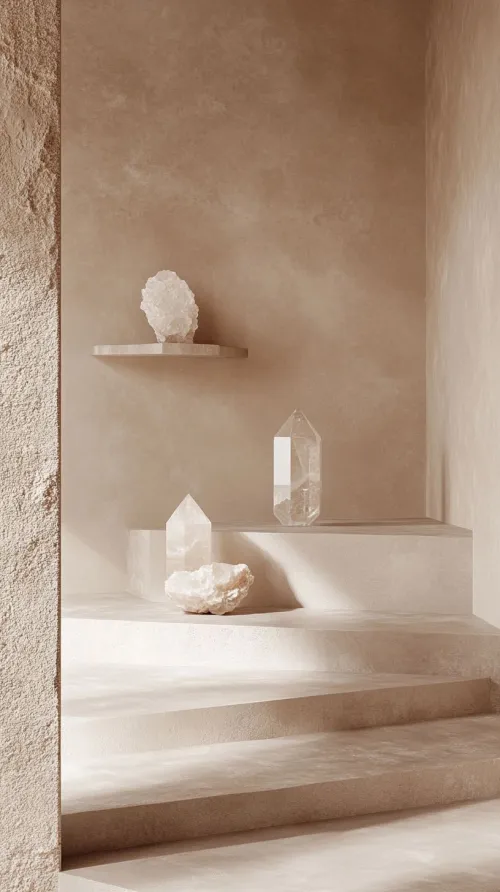
For dedicated meditation spaces, single terminated points create beautiful directional focus when positioned at eye level during seated moments. Notice how ceiling height impacts your selections—low shelves in vaulted rooms accommodate taller specimens without dwarfing proportions.
High-Traffic Zone Considerations
Passages between rooms act as energetic corridors. Tumbled stones here withstand accidental bumps thanks to that Mohs hardness rating of 7, while still catching peripheral light. Entryway consoles create lovely first impressions—place a quartz where sunset hits diagonally through your front door for transient evening glow.
How Clear Quartz Interacts with Environments
Place quartz near electronics and you might notice a vague sense it needs repositioning weekly rather than monthly. This material dances with surrounding energies like light refracting through water—sometimes visible, often felt. Humidity variations affect how we maintain them; periodically check bathroom placements for condensation patterns near edges. Those natural inclusions? Under east-facing windows, they can refract sunlight into unexpected starbursts across your floor at precise seasonal angles—a phenomenon that often feels serendipitous when discovered.
Combined with metallic decor elements, energy flow characteristics may shift; bronze bases seem to ground clusters differently than silver stands. Notice how south-facing rooms intensify refractive displays compared to muted north-facing exposures.
Light and Space Dynamics for Effective Use
Clear quartz fundamentally changes its personality under artificial versus natural light. That 90%+ light transmission rate becomes particularly magical when afternoon sun hits crystals placed at three-quarter window height—creating mobile reflections that track daylight progression across walls. Indirect lighting placement produces soothing ambient effects, especially when positioned behind reading lamps where diffused sparkle appears as floating pixels. Height directly influences drama; elevated placements cast dynamic shadows during golden hour, while eye-level crystals offer immediate engagement.
For modestly sized rooms, observe size proportionality principles—pieces larger than your palm can overwhelm narrow shelves. Unpolished surfaces interact beautifully with candlelight, displaying complex fractals polished stones can't replicate. Sometimes moving a stone just six inches left captures dawn’s first rays rather than missing them entirely—these nuances transform passive objects into active participants in your space.
Morning Light vs. Evening Ambiance
East placements capture sunrise sharpness for sparkling clarity effects, while west positions glow warmly during sunset hours. LED lighting emphasizes surface reflectivity variations based on polish quality—notice how some facets become miniature spotlights.
Practical Experiences with Placement Choices
We once placed identical quartz clusters on opposite living room walls—under windows versus beside a bookshelf. After three weeks, the window specimen accumulated dust faster as light revealed micro-abrasions we’d normally miss. Meanwhile, the bookshelf stone visually merged with décor, making its presence subtle versus assertive. Temporary placements deserve experimentation: Move pieces monthly to discover which rooms feel energetically lighter or more focused. That cluster on your workspace? Watch how it scatters sunlight across documents differently than a single point—each shape uniquely influences ambience.
Clusters tend to disperse energy more broadly than pointed forms, making them ideal for shared spaces where family activities occur. Trust those impulses to shift stones before important calls or creative projects—sometimes intuition registers environmental needs before cognition does.
Rotational Experiment Technique
Try a quarterly rotation ritual:
- Seasonal shifts: Winter placement differs from summer as sun angles change
- Intention reset: Moving objects alters psychological associations
- Surface care: Rotational cleaning prevents permanent dust accumulation
Discover angles that play with shadows during afternoon tea.
Evaluating Crystal Quality for Specific Locations
When choosing window ledge stones, prioritize surface clarity since every minute imperfection will magnify against sunlight backdrops. Conversely, bookcase crystals benefit from unique formations and inclusions—under artificial light, impurities may become luminous surprises. Notice how hallway placements require durable specimens; those faceted surfaces appreciate gentle water cleaning after exposure from daily foot traffic particles. Kitchen counter stones demand mindful positioning: always avoid placement near food preparation splatter zones, as surface luster subtly dims if oily residues accumulate over years.
Dense inclusions unexpectedly enhance character in dimmer corners—their crystalline patterns interact beautifully with twilight and lamps. Avoid placing polished pieces under direct ceiling lights where unnatural glare overpowers their natural luminosity.
Where Intuition Meets Mineral
Sometimes universe communicates through spatial serendipity—that quartz rolling unexpectedly off the shelf becomes invitation to place it not where thought best, but where feels right. Perhaps rearranging stones becomes meditation itself, physical practice mirroring life’s continual repositioning needs. Notice moments when room’s ambience seems asking for particular lightness near windows or grounding near doors. Trust instinctive decisions more than expert diagrams; often our spaces shape crystals just as much as crystals shape spaces. Transformation comes not from perfectly placed points but through attentive relationship with chosen objects—finding harmony requires both presence and willingness to reposition things when whispers prompt. Sometimes deepest insights arise simply paying attention where light unexpectedly dances across floorboards one Tuesday afternoon.
Geometric Considerations in Space Arrangement
Spherical quartz forms radiate energy multidirectionally—perfect centerpieces for round dining tables where conversations flow equally. Pointed clusters introduce visual momentum along hallways, subtly guiding movement through transitional zones. Bookshelf positioning gains sophistication when considering termination angles; position crystals so largest face catches light glancing off room entries for sparkling greetings. Metallic accents alter energy flow characteristics dramatically—copper stands harmonize earthy tones while chrome intensifies modern-minimalist spaces. Always evaluate weight distribution before placing larger specimens on delicate shelving. Notice that alcove with morning sun? Geometry experiments thrive there: place spheres, pyramids, and wands together to discover refraction symphonies unavailable when isolated.
Clusters near seating arrangements encourage group connection energy, while solitary points establish private focus zones. Wall niches create optical galleries for specimen appreciation without clutter.
Common Misunderstandings about Placement
Q: Should every windowsill have quartz for maximum energy?
Well-intended but often counterproductive—overcrowding spaces diminishes individual crystal impact while creating cleaning challenges. Instead, prioritize key areas where morning light interacts beautifully and trust less “productive” spots might need energetic breathing room.
Q: Does position relative to electronics really matter?
While quartz doesn’t magically neutralize electromagnetic frequencies, its proximity to devices does require mindful care. Notice accelerated dust accumulation and energetic “tiredness” manifesting faster than placements elsewhere—a prompt for gentle cleaning or rotation rather than electromagnetic claim.
Q: Can any quartz size work anywhere if intentions are strong?
Material presence matters—that palm-sized sphere dominating a tiny hallway table creates imbalance distracting from peaceful transit. Proportional harmony respects spatial boundaries: small crystals support delicate surfaces better than oversized specimens could.


![White Crystal: Ultimate Guide to Benefits, Uses & Real vs Fake [2025]](https://www.clearquartzblog.com/cdn/shop/t/151/images/empty_bag.png?v=8.7428)
