Authentic clear quartz reveals its identity through organic imperfections in light behavior, distinctive thermal response, and geological clues in its structure. Synthetic or imitated stones often lack natural inclusions, show distorted light patterns, and feel unnaturally light or warm to the touch.
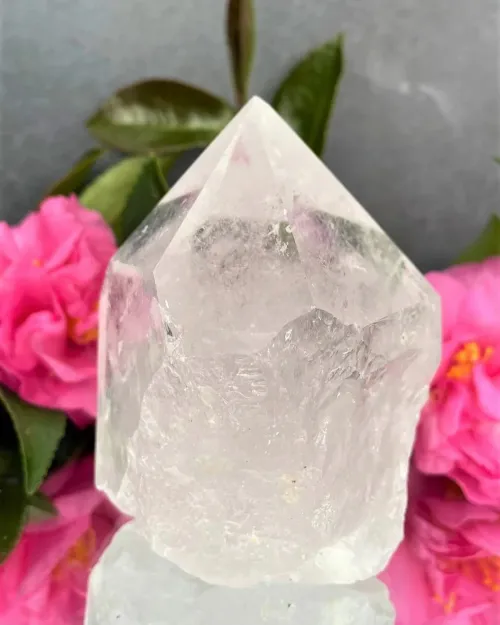
You know that moment in a crystal shop when a clear quartz point catches your eye? There's something magnetic about how the light seems to dance inside it - almost as if the stone whispers its authenticity directly to your senses. The trouble starts when you second-guess that instinct. Maybe you've picked up a piece that looked perfect but left you questioning, or perhaps you've avoided buying altogether because distinguishing real from imitation feels like decoding alien hieroglyphs. It’s frustrating when something intuitively calls to you, yet rational doubts creep in. Let me reassure you: learning to identify genuine clear quartz combines simple sensory observation with appreciating nature's craftsmanship. That little voice noticing subtle rainbows dancing under the surface? Pay attention to it.
Paths Through the Crystal Landscape
Key Characteristics of Authentic Clear Quartz
Imagine holding nature's masterpiece forged over millennia - the markers of authenticity feel different from plastic perfection. Real quartz carries subtle signatures: that faint cloudiness deep inside tells a story of mineral inclusions trapped during its formation. As you rotate the stone you'll notice its atomic structure creates faint lines along its length. These growth striations are actually visible trails of its creation journey - like geological diary entries.
The stone’s molecular architecture - silicon dioxide in hexagonal patterns - forms a base fingerprint you can’t visually see but feel through weight and presence. After all, when something has existed longer than human civilization, it should carry some tangible gravitas. Hold similar-sized glass and quartz: the quartz will feel more substantial in your palm than typical glass, yet less dense than fancy lead crystal.
Picture the moment clear quartz began forming deep underground: a drop of mineral-rich water seeping into a crevice over centuries, growing layer by microscopic layer under tremendous pressure. This geological backstory explains why even premium specimens aren't perfectly homogeneous. They carry hints of their origins as faint veils suspended inside, visible when you angle the stone toward a light source. These internal clouds tell you it’s nature-made rather than factory-pressed.
Natural formation also creates beautiful inconsistencies - areas with slightly different transparency like visual harmonies within the stone. Where lab-grown quartz might look uniformly sterile, authentic pieces show these gentle variations like light moving through glacial ice. Some zones might appear liquid-clear while adjacent sections seem softly diffused because crystallization patterns naturally fluctuate during formation. It’s not a flaw - it’s a birthmark.
Light Interaction and Visual Properties
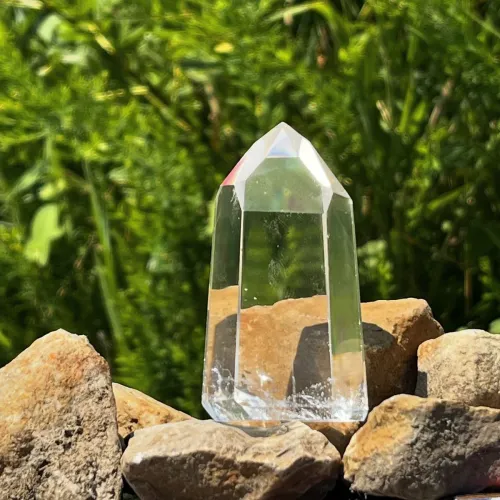
Turn a piece in sunlight and witness stone's conversation with light - real clear quartz becomes an optical conductor that transforms illumination into visual poetry. Watch for crisp rainbows dancing within; double-check those prismatic displays using polarized light to reveal the signature double spikes known as double refraction. And here’s a fun test: place it over printed text on a sunny windowsill. Authentic quartz acts like a high-resolution lens keeping letters sharply defined.
Different hours reveal different personalities too - morning light exposes hidden textures while artificial lighting unveils depth variations. When shopping online, remember studio lights can create dazzling illusions. That breathtaking crystal photo? The reflections trickery might exaggerate internal characteristics. Always request multiple lighting scenarios when buying sight-unseen.
The Light Test Sequence
First, move the crystal beneath a direct light source at different angles. Those sharp spectral flashes? Genuine quartz conducts light with characteristic precision. Now cup it between your palms to block ambient light - some natural specimens will show faint bioluminescence after UV exposure. Finally, press it against reading material and see whether letters look slightly magnified yet undistorted underneath.
- Key signal: Crisp rainbow fractals visible at multiple angles
- Warning note: Glass imitations scatter light into blurry spots
- Hidden clue: UV-induced whisper-luminescence in darker environments
Evaluating Textures and Temperature Cues
Coolness to the touch offers the first hint - place quartz against your cheek after it's rested at room temperature. Notice how it pulls warmth from your skin for several seconds? That thermal conductivity test distinguishes it from synthetic lookalikes. Glass or plastic warms almost instantly against your body. The thermal conductivity creates this persistently cool tactile sensation unlike anything synthetic.
Texture provides another dimension: run fingertips gently across natural surfaces. Mature quartz develops character through microscopic surface signatures - slight abrasions on older crystals light-diffuse differently than new ones. Perform the water bead test too: genuine stones cause droplets to stay rounded rather than spreading flat due to surface tension properties. Think of water as nature's authenticity probe.
Listening to Crystals and Intuition
Sometimes the deepest knowing moves through subtle senses rather than textbook logic. When you encounter a crystal that resonates, like the moment sunlight reveals a rainbow pattern or its touch feels intuitively "right," tune into that awareness. Stones mirror the universe's intricate balance - perfection exists in "flaws," clarity emerges from complexity, and wisdom whispers through quiet observation. You build discernment muscle each time you acknowledge these soft insights.
The next time you doubt your judgment, pause: breathe, then revisit that intuitive spark that first drew you. Your hands and senses innately recognize authenticity - whether you're holding crystalline formations or life choices. Clear quartz symbolically teaches that inner clarity often comes through embracing natural imperfections while trusting your perceptual integrity.
Practical Guidance for Purchasing Decisions
Here's how to transform abstract characteristics into confident choices when acquiring stones. Examine facet junctions first: natural crystals show microscopic asymmetries in their structure, whereas synthetics display unnaturally uniform angles. Watch for growth zoning differences too - the subtle variations in clarity distribution across the specimen. Natural stones reveal these faint asymmetries when you compare opposite sides.
Long-term care forms part of your assessment. Ask about prior damage sources if considering vintage crystal: has it lived near harsh chemicals? Repeated abrasive contact over years creates micro-scratches altering its light diffusion. Jewelery settings need protection too - quality designs accommodate natural cleavage planes avoiding direct pressure against crystal edges. Remember, quartz rewards attentive guardianship as much as initial recognition.
Common Misconceptions and Distinctions
Q: Shouldn't real quartz always be perfectly transparent?
A: This misconception trips up buyers! Natural formation involves mineral-rich solutions, pressure shifts, and temperature fluctuations - these frequently manifest as internal clouds or wisps. Glass might offer optical uniformity, but genuine quartz embraces character. Observe how light plays through: the fogged areas should retain depth rather than look flat.
Q: Do climate changes affect authenticity?
A: Noticeable impact? Minimal. Humidity and temperature shifts don't alter quartz internally, though surface condensation might temporarily blur visibility. Where synthetics sometimes warp or discolor under extreme conditions, authentic quartz maintains structural consistency - a reassuring constant.
Q: Can an heirloom piece lose its 'realness'?
A: Surface condition changes gradually - minor scratches may soften reflections after decades - but core properties endure. When evaluating older pieces, focus on depth perception under different lighting contexts. Natural crystals age like wine: developing character rather than expiring.

![White Crystal: Ultimate Guide to Benefits, Uses & Real vs Fake [2025]](https://www.clearquartzblog.com/cdn/shop/t/151/images/empty_bag.png?v=8.7428)
